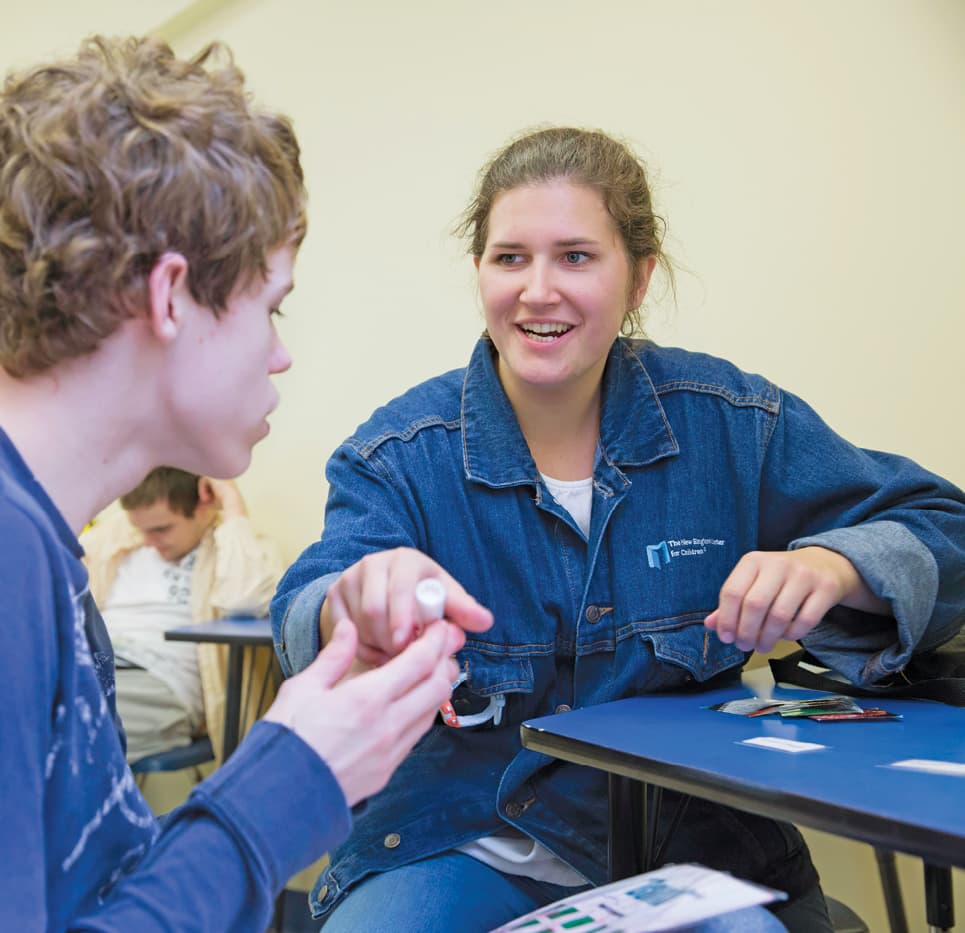
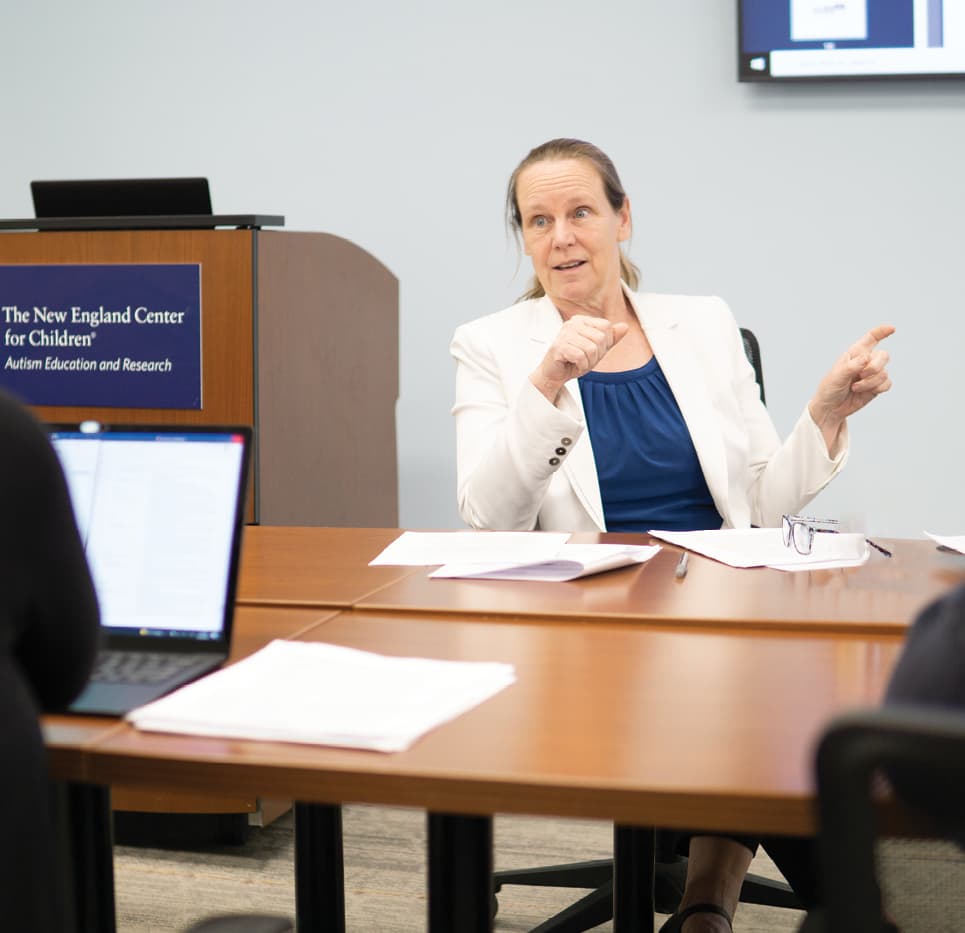
This world-renowned program was developed in response to the increasing demand for scientists and practitioners of evidence-based methods for the education and treatment of individuals with autism and related disabilities. The PhD program in Behavior Analysis at Western New England University will give you the skills to fill this void and become a leading voice in the field. Through a combination of coursework and supervised practical and research experiences, the aim of the Department of Psychology is to train researchers and scientist-practitioners in the discovery, translation, and application of knowledge toward solving human behavior problems of societal importance. Our graduates have gone on to contribute critical research to the field and work in a variety of clinical and academic settings.
One of the strengths of the program is our partnership with the prestigious New England Center for Children to offer this program to staff with faculty on their campus. The Center, located in Southborough, MA, is home to a school for over 250 children with autism and includes a faculty of over 1000 educators. The Center provides state-of-the-art education for children with autism and related disorders. Student funding and support are available for this program.
“As soon as I started the program, it felt like a great match. Some of the benefits of the graduate program, for one, are that it is very accessible. I think a lot of people struggle with the decision to work full-time or go to school full-time, and it’s nice that you can have both here.”–Gianna Davino
Students are expected to complete 54 credit hours with at least 27 of those hours being seminars (the remaining 27 may be dissertation credit, behavior analysis practica, and additional elective seminars). Courses will be offered in three of the four 11-week terms scheduled by the Western New England University Graduate Program (Fall, Winter, and Spring terms).
Students are expected to enroll in 7 total credits in three of the four terms in each of the initial two years of the program. Students are expected to enroll in a total of 4 credits in three of the four terms in the third year of the program. Students not finished with the program by the end of the third year register for 1 credit of dissertation continuance in all subsequent years until completion of all degree requirements.
Candidates interested in this program need to have earned a master’s degree in behavior analysis or a related discipline or be certified as a master’s-level behavior analyst by the Behavior Analysis Certification Board. Candidates must also have earned a minimum of a 3.6 grade point average (GPA) in their master’s degree program.
Knowledge and skills are developed through an intensive, 3-year, full time curriculum of (a) formal course work encompassing conceptual, historical, translational, basic, and applied domains of behavior analysis, research and scholarship, professional communication, legal and ethical issues, and teaching; (b) supervised practicum experiences integrating research, college teaching/advising, and professional practice; (c) a requirement to write, present, and defend a publication-quality, extensive, integrated, and critical review of basic, applied, or conceptual literature relevant to behavior analysis; and (d) a requirement to propose, conduct, write, present, and defend an empirical dissertation whose questions and methods are based on a behavior-analytic approach. All students must be engaged in behavior analytic activities at least 20 hours per week in addition to their formal coursework.
The program may be completed in three years and must be completed within seven years.
The Program's faculty hold various leadership positions in the field of behavior analysis and routinely present and publish their research findings. Advisors function as mentors and agree to oversee the professional development of the student. The faculty listed here may serve as advisors for students. We encourage you to reach out to prospective advisors.
To contact our full-time WNE faculty:
To contact our off-campus faculty: