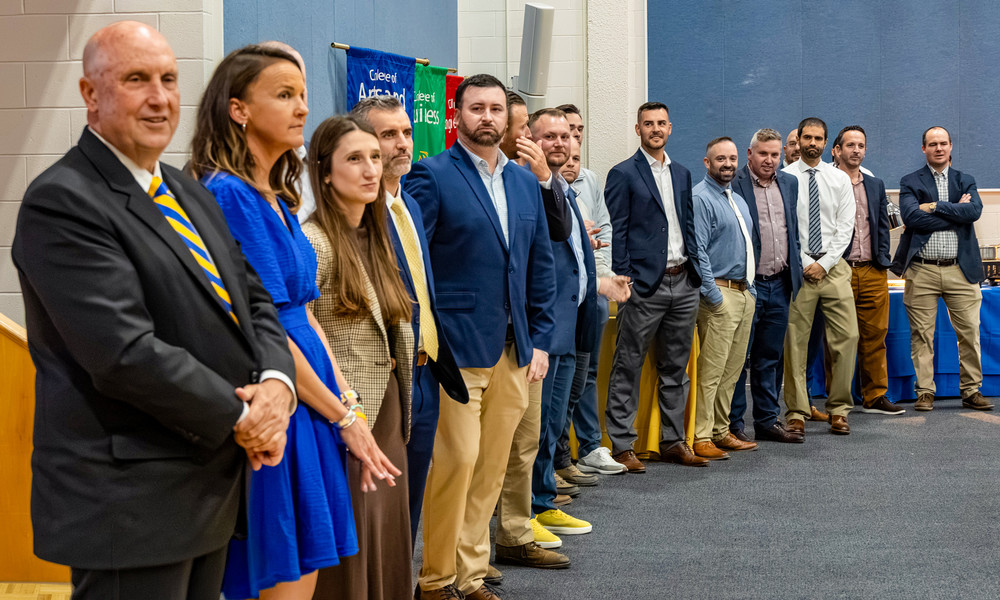
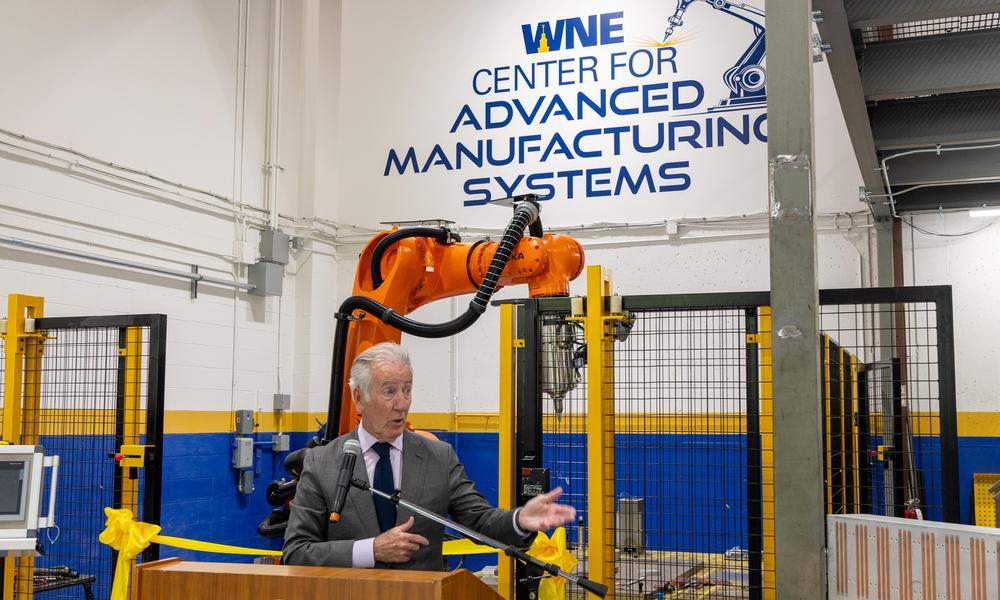
Western New England University celebrated the opening of its Center for Advanced Manufacturing Systems (CAMS) during a ribbon-cutting ceremony held as part of the University's inauguration festivities. Made up of three built-for-purpose specialized laboratories, CAMS is designed to provide students with hands-on experience using a range of advanced manufacturing technologies while supporting faculty and student research, workforce development, and industry collaboration.
Funded through an $850,000 federal earmark secured by Congressman Richard Neal and a $1.1 million grant from the Healey-Driscoll administration through the Innovation Institute at MassTech Collaborative, CAMS serves as a resource for students, faculty, and regional industry partners.
“What makes CAMS especially exciting is the way it brings together education, innovation, and the real potential for industry engagement in one place,” said Christian Salmon, Professor and Chair of Industrial Engineering & Engineering Management. “The robotic welding lab, which features our new friction stir welder, is one part of our expansion into industrial automation systems that will give our students an advantage in the workforce when it comes to recognizing and understanding applications that other students won’t have.”
The Center for Advanced Manufacturing Systems includes three specialized laboratory spaces located in two campus buildings. The Robotic Welding Lab features advanced welding technologies, including the new Kuka industrial robot-based Friction Stir Welder (FWS), ABB industrial robot-based laser welding systems, UR cobot-based robotic welders, and traditional welding equipment located in the Campus Utilities Building. The FWS is an unique technology that binds materials together without melting the metal. In doing so, it demonstrates the same advanced joining technology used to manufacture components for aircraft, spacecraft, electric vehicles, rail systems, and other high-performance products where strength, reliability, and lightweight materials are essential. The Robotic Welding Lab will hold its first class in Spring 2027.
For industrial partners, the robotic welding lab provides access to specialized infrastructure for testing that few organizations can build on their own. Industry partners will be able to use the facility to:
• Accelerate time-to-market with reduced R&D risk
• Collaborate with WNE faculty experts and student innovators
• Test applications of the equipment to determine utility before purchasing
The Industrial Automation Lab provides students with access to collaborative robots, integrated conveyor systems, machine vision technology, and industrial-scale CNC equipment used in modern production environments. The Materials Lab offers advanced testing and analysis capabilities for engineering materials, supporting both student learning and applied research. Both labs are located in Sleith Hall.
These facilities are integrated into Western New England University's undergraduate and graduate engineering programs, creating opportunities for senior design projects, faculty-led research, and industry collaboration. Students gain exposure to the technologies and production systems they are likely to encounter throughout their professional careers.
WNE College of Engineering Innovation Hubs
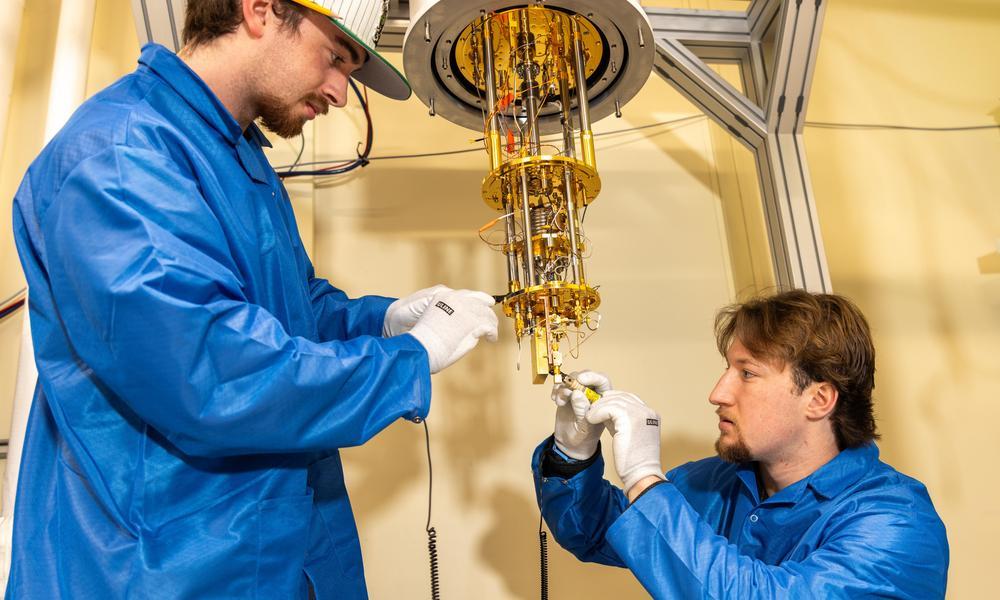
WNE’s College of Engineering is home to three innovation hubs—the Center for Quantum Hardware Development, LEAP@WNE Integrated Photonics and Optics Laboratory, and the Center for Advanced Manufacturing—all advancing research, education, and industry partnerships in next-generation technologies.
As manufacturing continues to evolve through automation, robotics, and advanced production technologies, CAMS positions Western New England University as a leader in preparing the next generation of engineers. By combining hands-on learning, applied research, and industry partnerships, the center will serve as both a training ground for future innovators and a resource for manufacturers across the region.